How to calculate a P-value from Z-score

To calculate the P-value from a Z-score, you need to find the value that corresponds to the Z-score value from the Z-score Distribution Table.
This tutorial will show some examples on how to use the Z-score table.
Example 1: Find P-Value for a Left-Tailed Test
Suppose you run a left-tailed hypothesis test and get a Z-score of -1.32. To find the P-value from this score, you need to go through the table and find the value that corresponds to the score:
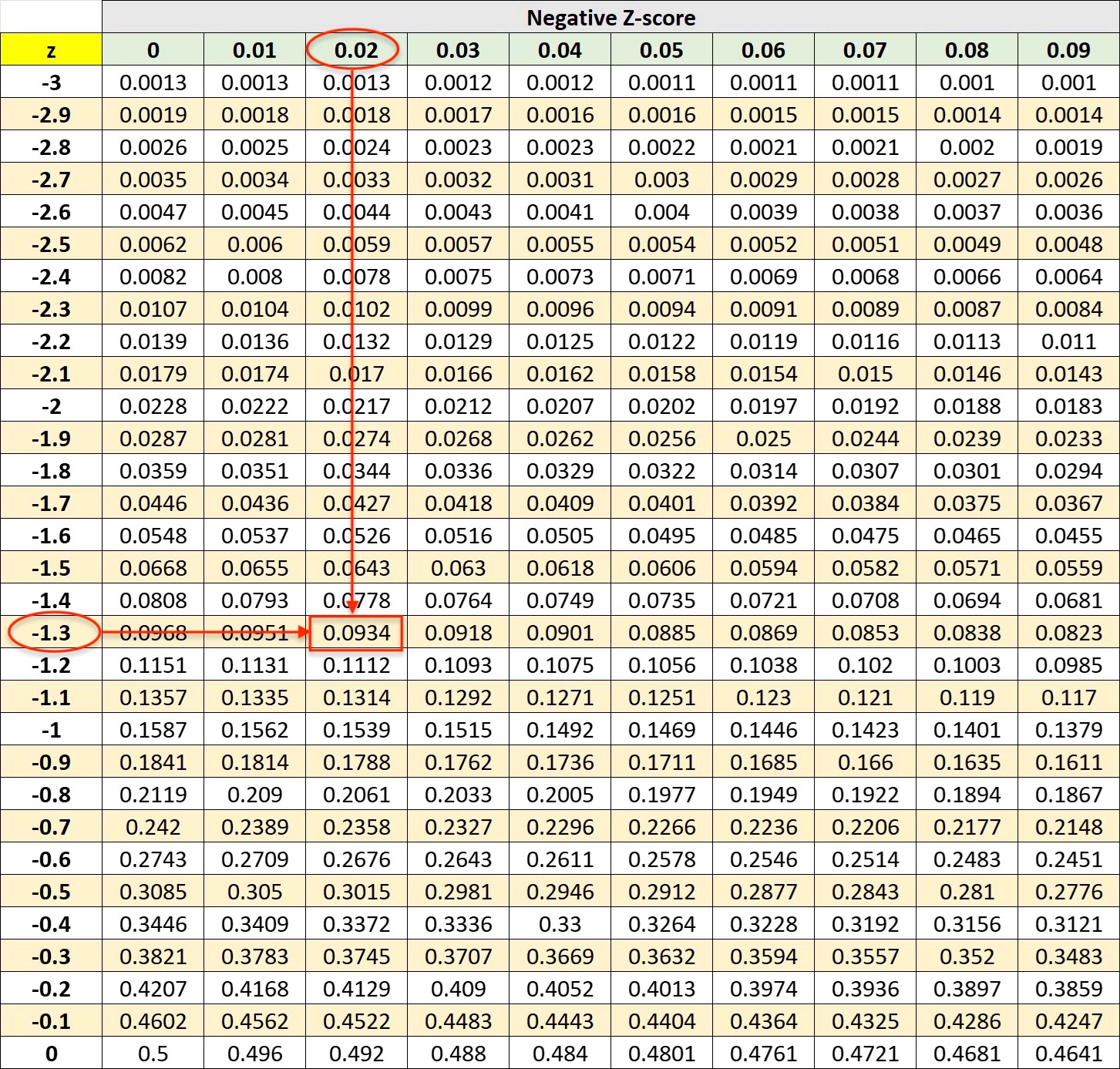
The P-value for a Z-score of -1.32 is 0.0934.
Example 2: Find P-Value for a Right-Tailed Test
If you’re running a right-tailed test, you need to subtract the table value from 1 to get the P-value.
For example, suppose your Z-score is 2.11 so you seek the value from the table as follows:
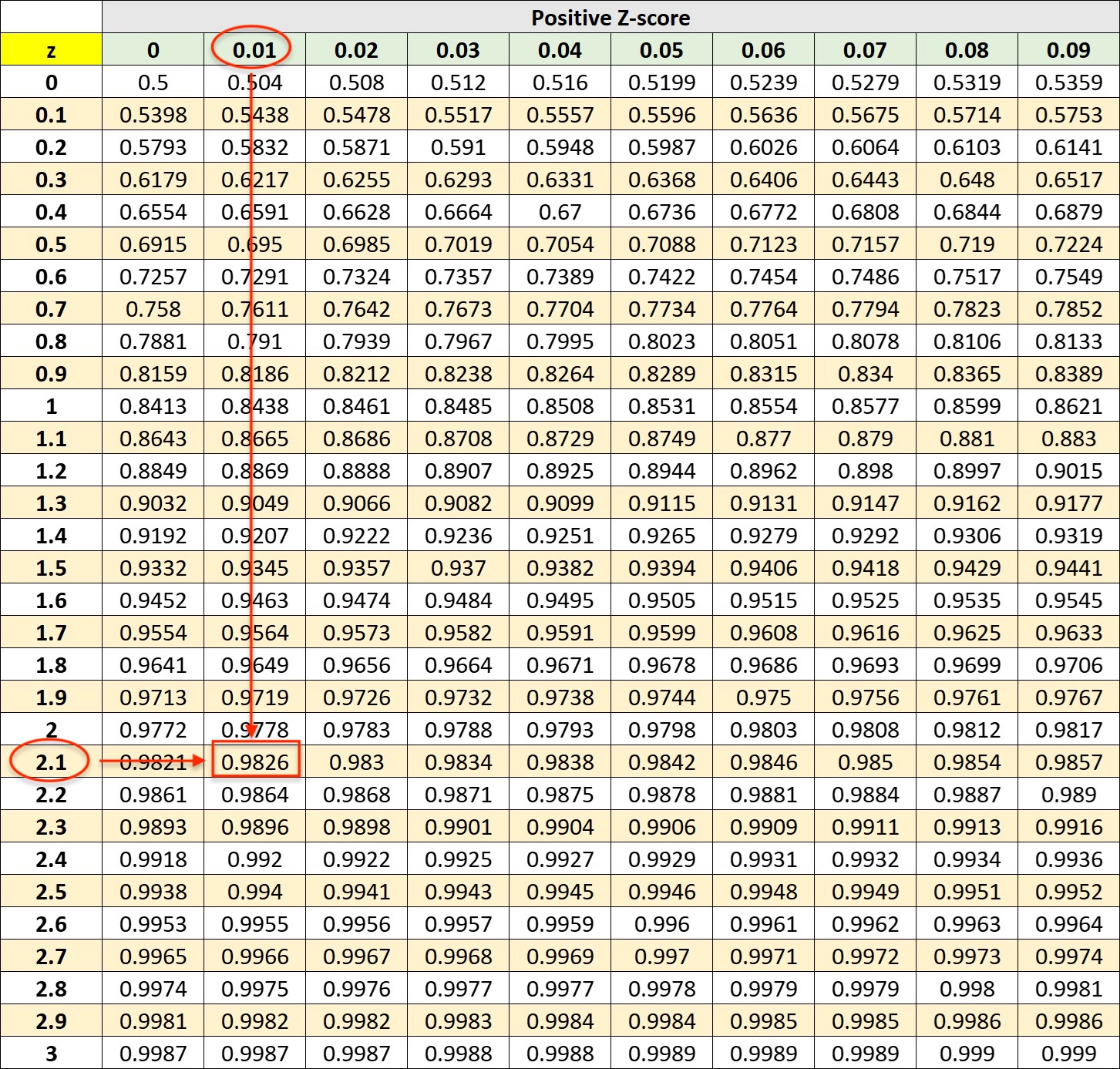
The P-value is 1 - 0.9826 = 0.0174.
Example 3: Find P-Value for a Two-Tailed Test
When you’re running a two-tailed test, you need to multiply the table value by 2 to get the P-value.
Suppose you run a two-tailed test that has a Z-score of 0.75. Let’s get the value from the table:
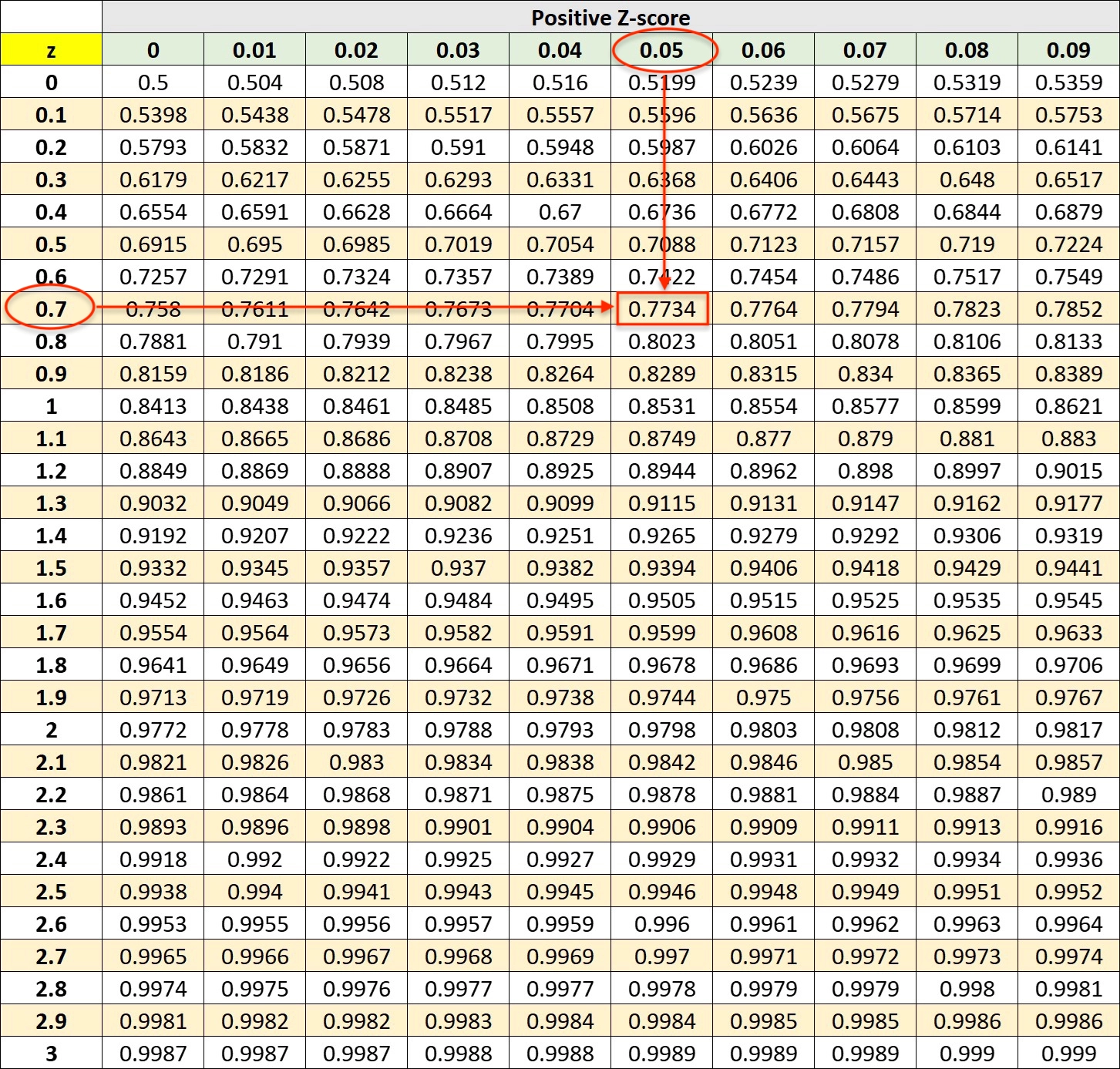
The P-value for this test is 0.7734 * 2 = 1.5468
You can calculate the P-value manually this way, but if you need a faster way, then you can use the P-value calculator I’ve created here.
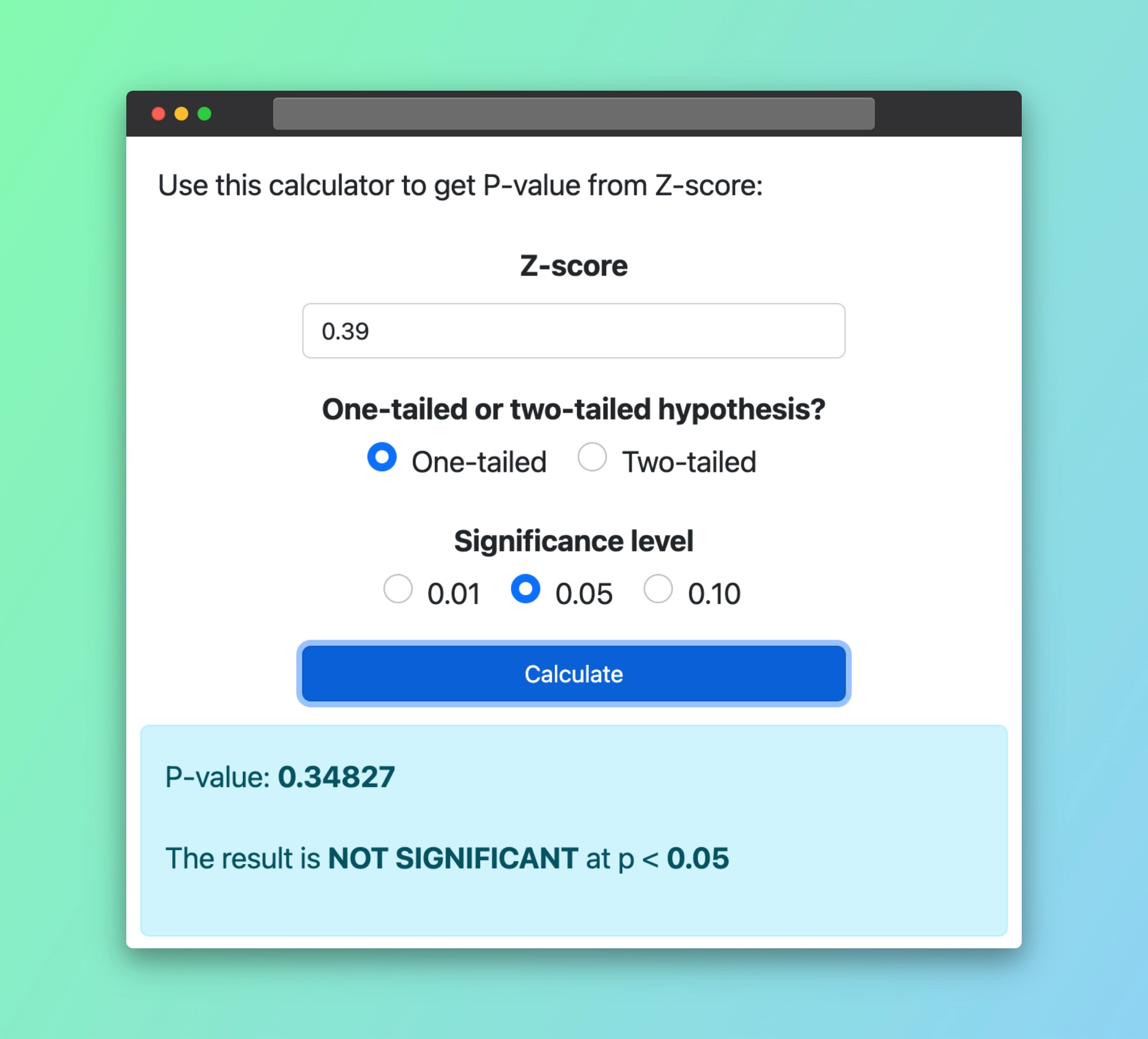
The calculator will need the Z-score, one or two-tailed test, and the significance level to calculate the P-value for you.